
Wake Forest Records by Custodian
No single office holds every local file. The Town Clerk keeps municipal materials, while Wake County holds most land and tax files. North Carolina courts control case files. State and county health-record offices split certificate work. The first task is to identify the record set and its legal keeper, called the custodian. For northern addresses, confirm the county before using a portal.
| Record group | Official keeper | Digital starting point | Access route |
|---|---|---|---|
| Town minutes, boards, permits, correspondence | Wake Forest Town Clerk or responsible department | Town pages and request form | Published file, electronic request, or Town Hall counter |
| Deeds, liens, plats, assumed names | Wake County Register of Deeds | Current records application or CRPI | Free index and images where offered; office copies and certification |
| Parcels, owners, tax bills | Wake Tax Administration | Real Estate Search and iMAPS | Free portal; tax office by phone or email |
| Civil, criminal, estate, family cases | Wake County Clerk of Superior Court | North Carolina eCourts Portal | Online case data, courthouse terminal, Clerk copy |
| Birth, death, marriage, divorce | County Register of Deeds, Clerk, or NC Vital Records | State service portal | Eligibility, ID, and fee depend on record and copy type |
| Detention, correction, registry | Wake Sheriff, NC DAC, NC SBI | Separate official systems | Current lookup or agency request |
Some rows are open only in part. Sealed and expunged cases, juvenile and adoption material, protected voter residences, Social Security numbers, motor-vehicle data, and sensitive investigation or victim information can be closed. A public index does not open each linked page or attachment. The office should redact an exempt field and release the rest when state law permits that split.
Wake Forest Records Under Chapter 132
North Carolina Public Records Law applies to documentary material made or received in public business. G.S. 132-1 calls those materials the people’s property. Under G.S. 132-6, any person may inspect them at reasonable times and seek copies. A requester need not live in North Carolina or give a reason.
The law says an agency must act “as promptly as possible,” but it sets no fixed number of days. G.S. 132-6.2 lets the requester choose a medium the agency can produce. An uncertified copy usually costs no more than direct reproduction. Ordinary staff time and overhead are not part of that basic charge. A broad request that calls for unusual technical or clerical work may bring a reasonable special-service fee, which the agency should explain and estimate first.
Note: Ask for rolling delivery when responsive files can be produced in parts instead of waiting for one large final release.
Request Wake Forest Town Records
Town Hall is the right channel for Board of Commissioners minutes, ordinances, appointed-board materials, contracts, petitions, municipal correspondence, and Town project files. Search posted agendas, minutes, department pages, and project material first. If the file is absent, use the Wake Forest transparency and request route. Town Clerk Evelyn Wright is the permanent-record custodian. Town Hall is at 301 S. Brooks Street and has public hours Monday through Friday, 8 a.m. to 4 p.m.
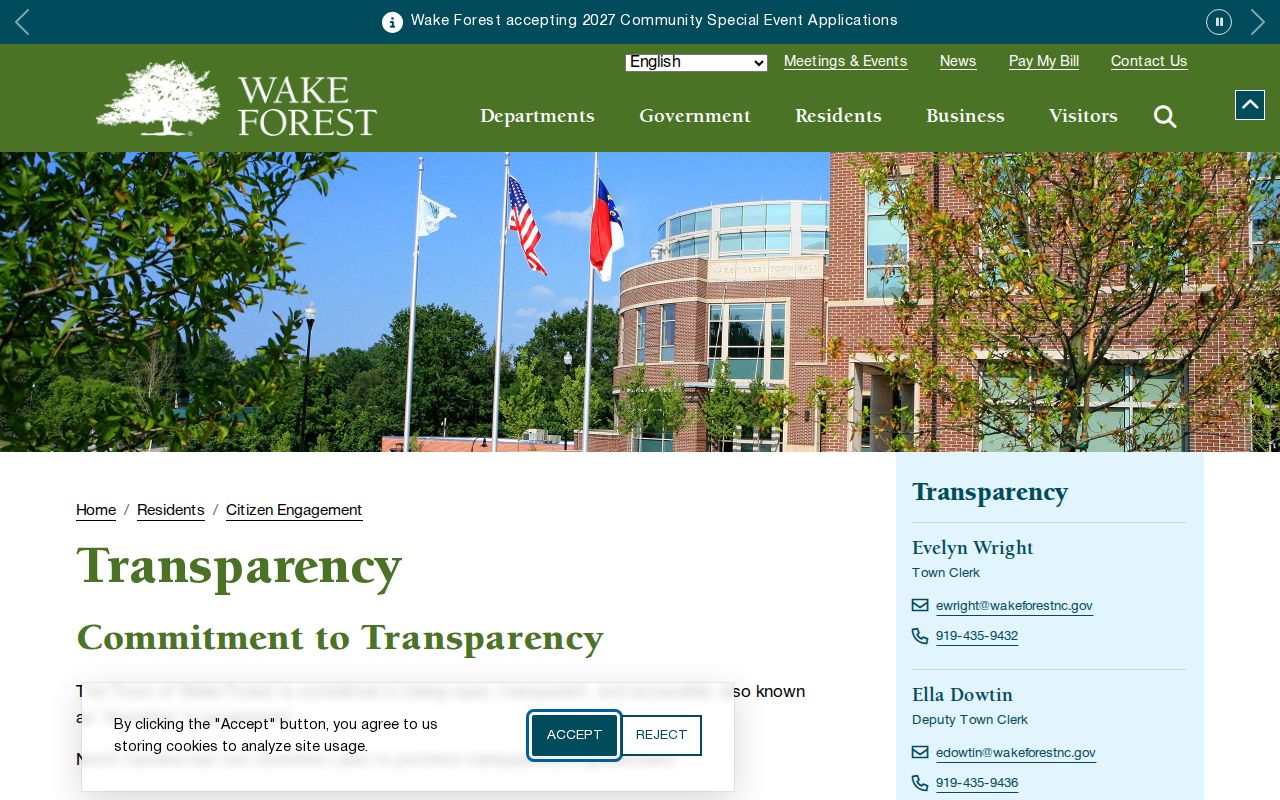
The captured Town screen points to the municipal channel, not a county deed or court search. A useful request names the board or department, person, project, permit, address, and inclusive date span. It also states whether electronic or paper delivery is wanted. Planning and Inspections handle address-based project material. Wake Forest Police Records handles releasable incident information subject to G.S. 132-1.4. Ownership, deeds, and court files belong elsewhere.
Access Wake Forest Deed Records
The Wake County Register of Deeds records application and the separate Consolidated Real Property Index locate deeds, deeds of trust, liens, easements, plats, and other instruments. The CRPI site says images reach back to July 1785. Search several spellings, initials, former names, trustee or entity names, wider dates, and book/page when known. An index row is a locator. The instrument image is the fuller record.
Wake County also built an Enslaved Persons Search for names and references found in recorded instruments. At research inspection, it reported 2,156 items across 144 pages. It is not a census or complete family tree. Grantor and grantee roles may refer to an enslaver, estate, trustee, or another party, so never assign one of those surnames to a named enslaved person without evidence from the image.
| Portal field | Control | Use | Result detail |
|---|---|---|---|
| Keyword | Text box | Enter a name, date, book, page, or party term | Results matching the selected field |
| Search by | Choice list | All, Date, Book, Page, Grantor, Grantee, or Enslaved Person’s Name | Record ID, date, book, page, DocId, parties, and listed names |
| Page size | Choice | 15, 30, 60, or 100 rows | Changes how many index rows display |
Read the scan for exact recording time, document type, parcel IDs, party capacity, mailing and return addresses, legal description, and scanned pages. A browser image is not a certified copy. The recorder supplies certification and can help with older or access-limited material.
Read Wake Forest Property Records Carefully
Wake County Real Estate Search accepts an owner name, business name, street address, REID, or PIN. A parcel result can show the owner, separate mailing and situs addresses, legal description, deed book/page, sale facts, values, building data, tax district, and bill links. “Situs” means the physical parcel location. The mailing address is where tax mail goes. Neither field alone proves who lives at the site.
The Wake County iMAPS viewer adds parcel boundaries, jurisdiction, town or extraterritorial planning status, and mapped layers. This matters because Wake Forest crosses into Franklin County. A Wake Forest postal address or ZIP code does not pick the custodian. If Wake tools return nothing for a northern parcel, test the Franklin County GIS viewer before deciding that no record exists.
Property values and owner lines can change after a deed, split, or appeal posts. Record the retrieval date, REID or PIN, and deed reference. Tax bills available from 1994 forward can create a year-based billing trail, but sales tabs show transactions rather than continuous occupancy.
Note: GIS helps establish location and jurisdiction, but it does not replace the deed as legal title evidence.
Get Wake Forest Court Records
Wake Forest has no town court. District and Superior Court matters route through the North Carolina eCourts Portal and the Wake County Clerk of Superior Court. Basic Smart Search accepts a party name or case number. The Judicial Branch’s Portal training and resources explain advanced options for location, party details, case type, status, filing dates, and groups such as civil actions, nonconfidential special proceedings, estates, and criminal actions.
A docket is the court’s running list of filings and events. A public result may show the case number, caption, court, type, filed date, status, party roles, attorneys, hearings, disposition, and a register of documents. It does not prove that every document is viewable. Sealed, expunged, juvenile, and adoption matters are restricted. Charges remain allegations until the record shows a disposition.
When the web view stops, follow the state’s court-record retrieval instructions to use a courthouse public-access terminal or ask the Wake County Clerk for the named filing, judgment, full file, or certified copy. Terminals can search by defendant, case number, or victim/witness name, with civil, estate, and special-proceeding data also available through clerk offices. Inspection is free. NCAOC copies cost $0.25 per page, while exceptional retrieval or technical work may cost more. Federal and bankruptcy cases use PACER and the Eastern District, not the Wake Clerk.
Wake Forest Vital Records Have Tiers
North Carolina does not follow a blanket rule that closes births for 100 years and deaths for 50. G.S. 130A-93 distinguishes an uncertified informational copy from a certified copy that carries the custodian’s seal. Certified birth, death, or marriage copies require an eligible relationship or legal authority. Adoption records and identifying information follow separate sealed-record rules.
For a Wake County event, the Register of Deeds charges $10 per certified birth, death, or marriage certificate. The current county certificate form calls for a government photo ID and relationship information. Mail requests are processed within one business day after receipt. Statewide or uncertain-county searches go to North Carolina Vital Records, where the state fee schedule lists $24 for a three-year search and first copy, then $15 for another copy of the same certificate.
The North Carolina Vital Records application portal provides the state service route.
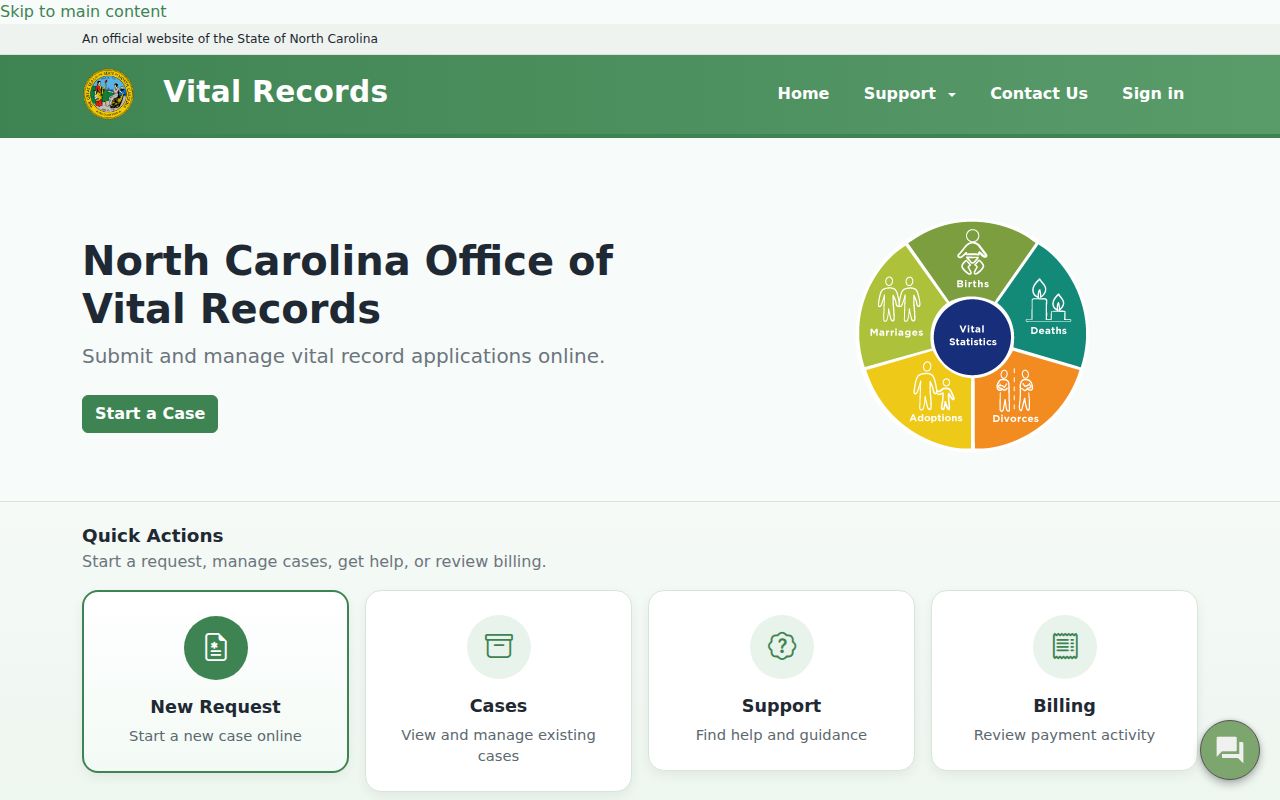
The portal is one channel, not the only one. County mail and counter service remain useful for known Wake-issued records. Divorce decrees and case files come from the Clerk; a divorce certificate comes from the state. The state’s marriage certificate route begins with 1962 coverage, while older marriage files go to the county that issued the license. Archives, church files, newspapers, and cemetery evidence can aid family history without turning an uncertified source into legal proof.
Wake Forest Records Offices and Portals
Use the office that created or received the file. These contacts cover the main Wake Forest routes and their most useful fallbacks. The Town counter serves municipal files. The Register of Deeds handles land instruments and county certificates, while the Clerk controls court files. Tax Administration answers parcel and billing questions.
Wake Forest Town Clerk
301 S. Brooks St., Wake Forest, NC
919-435-9432
Municipal records and request service
Wake Register of Deeds
300 S. Salisbury St., Suite 1700, Raleigh, NC
919-856-5460
Land records and county certificates
Wake County Court Clerk
Wake County courthouse offices, Raleigh, NC
Court files, copies, and certification
Wake Tax Administration
Wake County property and tax records
919-856-5400
Owner, parcel, and tax-bill help
Franklin-side deeds and parcel questions go to the Franklin County recorder and GIS, even when the mailing city says Wake Forest. Town planning jurisdiction does not move land records from one county to another.
Separate Wake Forest Custody Records
Jail booking, state correctional custody, federal custody, and sex-offender registration are distinct systems. The Wake County Sheriff Detention Division is the local jail source. The NC Department of Adult Correction covers state custody and supervision. Federal Bureau of Prisons online results begin in 1982, with older federal inmate research routed to the National Archives.
The NC SBI Sex Offender Registry offers person and geographic search modes.
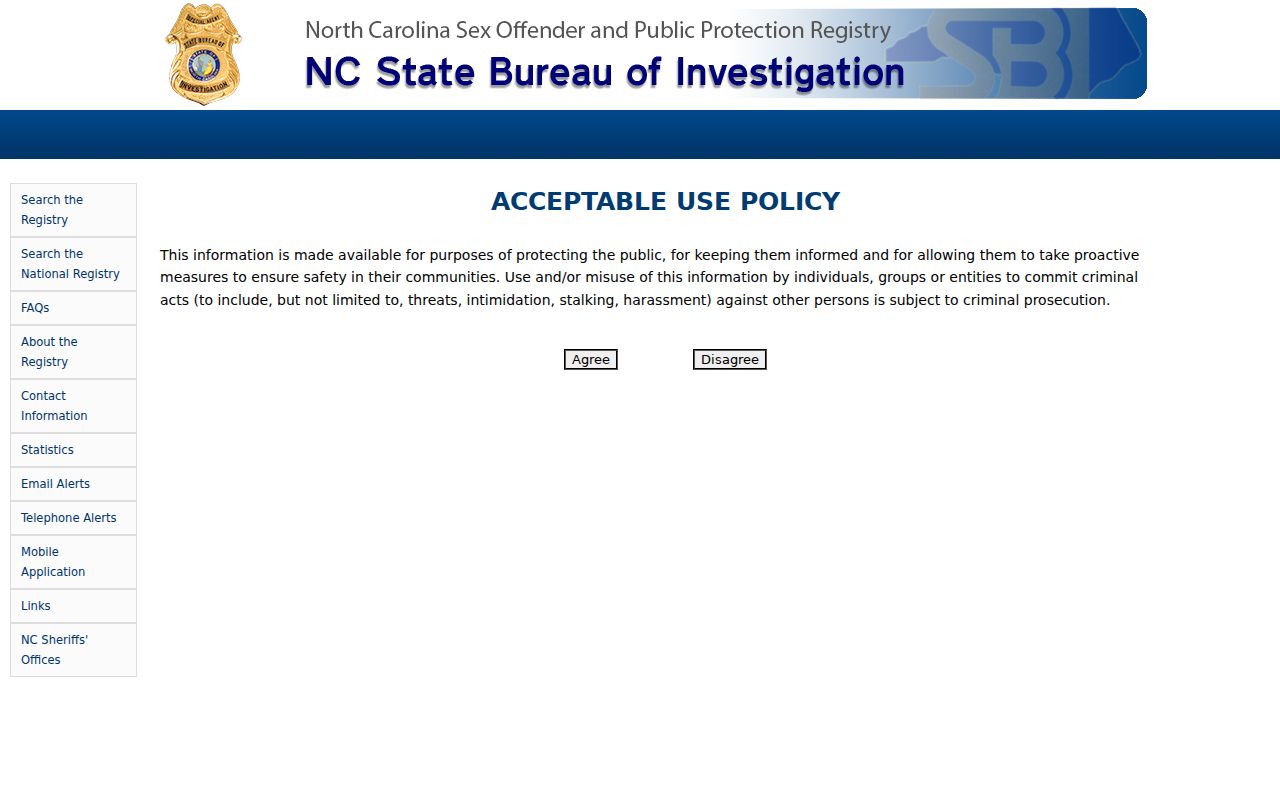
The registry capture shows why the official system should be read with its own warnings and current date. Match a result with the displayed photo, name, birth data, and official identifiers before treating it as the same person. A jail charge is not a conviction. A registry result also does not replace a court disposition or agency file.
For local police material, ask Wake Forest Police Records for a named incident, report, date, and location rather than all information about a person. G.S. 132-1.4 allows some basic incident information while protecting criminal intelligence, investigations, and sensitive victim details.
Wake Forest Records Fees and Copies
Free access to an index does not mean every product is free. The deed and property indexes can be searched at no charge, but the responsible office may charge for a plain paper copy or certification. Court inspection is free and NCAOC copies are $0.25 per page. A county certified vital certificate costs $10. The state charges $24 for its search and first certificate, and $15 for another copy of that same certificate.
Ask what kind of product is needed before paying. A downloaded image may be enough to read names or a legal description. A certified copy is an office-issued reproduction with formal authentication. It may be needed for an estate, identity matter, or other official use. Chapter 132 generally limits uncertified copies to direct reproduction cost, though an unusually extensive request may carry an explained special-service charge.
- Index
- A locator that points to a record but may not show the complete document.
- Image
- A scan of the filed document, often with details absent from the index row.
- Certified copy
- An authenticated copy issued by the office that holds the record.
- Custodian
- The agency or official responsible for the requested file.
- Exemption
- A law that permits or requires specific information to be withheld.
Protect Privacy in Wake Forest Records
Access does not erase privacy duties. G.S. 132-1.10 protects Social Security numbers and other government identifiers. State voter law closes a full date of birth, submitted email, ID copies and numbers, and copied signatures. The federal DPPA and state law restrict motor-vehicle information. A protected address in a newer file also does not remove an older deed from the recorder’s books.
The state address-confidentiality program gives eligible relocated survivors of domestic violence, sexual assault, stalking, or trafficking a substitute government-record address and mail forwarding. It is a forward-looking safeguard. It cannot erase every address that was already open or bind each private database.
Use records lawfully. Open records may support family history, estate research, consumer safety, and civic review. They never authorize stalking, threats, tracking, harassment, or harm.
Keep only the facts needed for the task, note the source and retrieval date, and delete working copies when they no longer serve a lawful purpose. When a recorded instrument exposes a protected identifier, use the Register of Deeds redaction process instead of seeking to remove the whole instrument.
Requesting Wake Forest Public Records
A narrow request is easier to route and process. Ask for an existing record series rather than asking the office to do open-ended research. Include known name variants, address, parcel ID, permit, case number, instrument book/page, and a realistic date span. State the preferred file format. For a large set, ask for an estimate and rolling production before the office begins costly work.
- Choose the custodian. Use the Town for municipal files, the county recorder or tax office for land files, and the Clerk for court files.
- Check the official portal. Save the index number, case number, parcel ID, or book/page that will help staff retrieve the exact item.
- Send a precise request. Give names, dates, department or record series, identifiers, and desired electronic or paper format.
- Confirm cost and scope. Ask for the direct copy cost, certification charge, or an advance special-service estimate.
- Address withheld material. Ask the office to release the nonexempt parts and cite the law for each withheld part.
If the agency denies access, ask for the statutory basis in writing. North Carolina provides a pre-litigation mediation path under G.S. 7A-38.3E. G.S. 132-9 also permits a requester to seek a court order, and qualifying prevailing requesters may recover attorney fees subject to statutory defenses. Form AOC-CV-830 is used for public-record denial mediation.
Older Wake records may have moved to the State Archives County Records Guide and catalog. Search by office and series, not just surname. Ask whether the item is original, microfilm, or digital, whether an index exists, and whether remote copies are available. A digital archive image remains different from a custodian-certified copy.